hohenlohe
If you are looking for the page with the statistics about this nation you can find it here: All Statistics
The cluster includes all the forms of the country.
The cluster includes the following incarnations of the same nation:
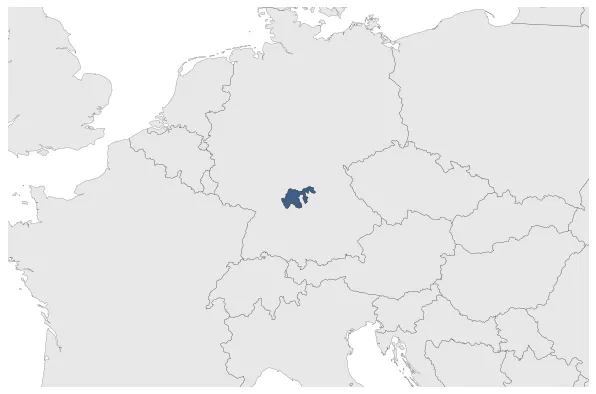
Hohenlohe County
Principality of Hohenlohe
Establishment
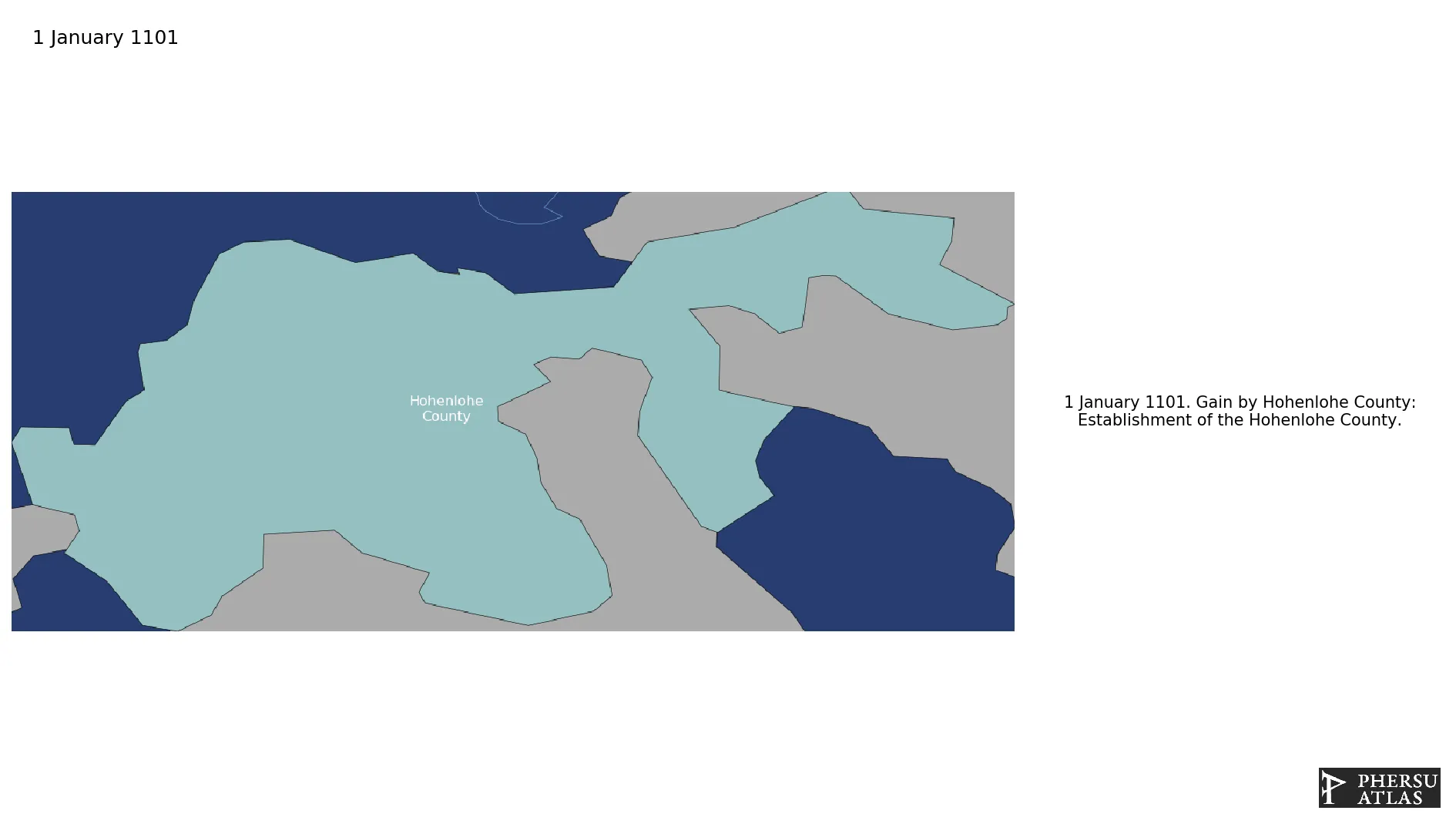
January 1101: Establishment of the Hohenlohe County.
Chronology
Interactive Chronologies with maps are available in the section Changes Navigation
Were a series of wars in Europe (and the overseas possessions of European countries) the 16th, 17th and early 18th that started after the Protestant Reformation. Although the immediate causes of the wars were religious, the motives were complex and also included territorial ambitions.
1.1.Thirty Years' War
Was a war that took place mainly in central Europe between 1618 and 1648. The war began as a religious conflict between Catholics and Protestant in the Holy Roman Empire but then escalated into a conflict for the hegemony in Europe between Habsburg Spain and Austria, Sweden and France.
1.1.1.Franco-Swedish Period
Was the fourth main period of the Thirty Years' War. It started with the intervention of the Kingdom of France.
1.1.1.1.Rhineland Front (France)
Was the Rhineland front during the Franco-Swedish period of the Thirty Years' War.
August 1645: French general Mercy and the Duc d'Enghien defeated the Imperial army at the Second Battle of Nördlingen on August 3.
November 1645: The French evacuate their ephemeral conquests in Germany, systematically devastating them.
Were a series of conflicts between France and several European monarchies between 1792 and 1815. They encompass first the French Revolutionary Wars against the newly declared French Republic and from 1803 onwards the Napoleonic Wars against First Consul and later Emperor Napoleon Bonaparte. They include the Coalition Wars as a subset: seven wars waged by various military alliances of great European powers, known as Coalitions, against Revolutionary France - later the First French Empire - and its allies.
January 1807: In 1806, the various Hohenlohe territories were divided between the Kingdom of Württemberg and the Kingdom of Bavaria. This decision was made as part of the territorial reorganization following the dissolution of the Holy Roman Empire.
January 1807: In 1806, the different Hohenlohe territories, ruled by the Hohenlohe family, were divided between the Kingdom of Württemberg and the Kingdom of Bavaria as a result of the territorial changes brought about by the dissolution of the Holy Roman Empire.
January 1220: In 1219, the brothers Andreas, Friedrich and Heinrich von Hohenlohe gave the Teutonic Order property and rights in Mergentheim, which made it the Commander of the Teutonic Order and laid the foundation for becoming a town and for the Teutonic Order residence.
January 1274: With the end of Hohenstaufen Dynasty influence from 1273, many imperial territories were acquired by states of the Holy Roman Empire.
January 1339: Around this time, a local nobility also appeared, the Lords of Adelsheim, whose Veste was mentioned in 1338.
January 1379: Hohenlohe-Uffenheim is sold to the Burgraviate of Nuremberg
January 1548: Based on Gustav Droysen's Map of the Holy Roman Empire at the time of the Reformation.
May 1744: Hohenlohe is raised to principality.
January 1788: Based on Gustav Droysen's Map of the Holy Roman Empire in the XVIII century.
Disestablishment
January 1807: In 1806, the various Hohenlohe territories were divided between the Kingdom of Württemberg and the Kingdom of Bavaria. This decision was made as part of the territorial reorganization following the dissolution of the Holy Roman Empire.
January 1807: In 1806, the different Hohenlohe territories, ruled by the Hohenlohe family, were divided between the Kingdom of Württemberg and the Kingdom of Bavaria as a result of the territorial changes brought about by the dissolution of the Holy Roman Empire.
Selected Sources
Droysen, G. (1886): Historischer Handatlas, Bielefeld and Leipzig (Germany), pp. 38-39
Droysen, G. (1886): Historischer Handatlas, Bielefeld and Leipzig (Germany), pp. 46-47
Krumenacker, Y. (2008): La Guerre de Trente Ans, Paris, Ellipses, pp. 144-145